H1BScan
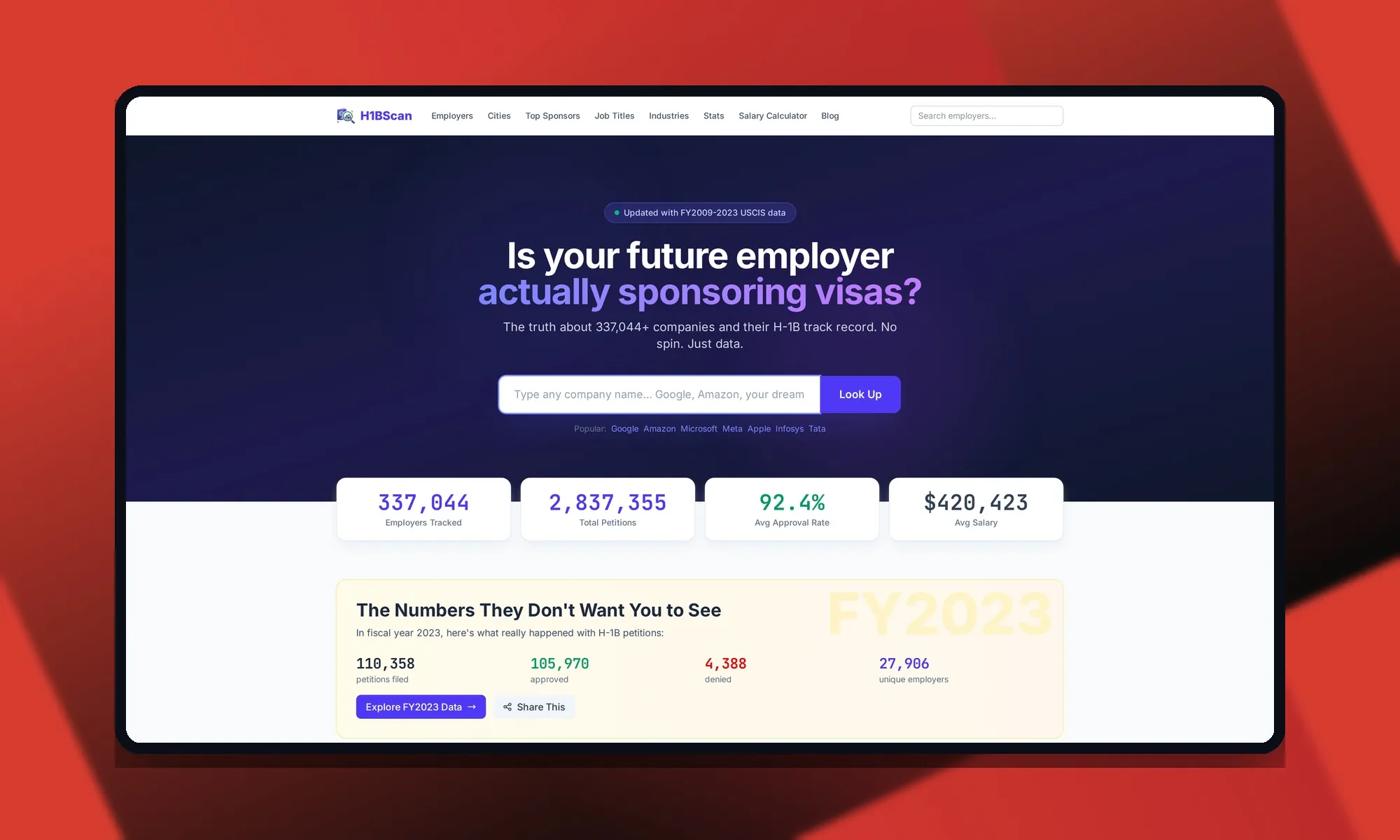
A US H-1B visa data explorer that I designed, built and operate: the petition history, approval rates and salaries of 337,044 employers, turned into a search tool anyone can use. Laravel + MySQL + programmatic SEO.
Why it exists: the data is public, but nobody can read it
For a foreign engineer negotiating with an American company, the deciding question is not the salary — it is whether that company actually files H-1B petitions, and how often they succeed. The information is public — USCIS and the Department of Labor release it every quarter — but it arrives as raw files with millions of rows, impossible for a normal person to query. Betting your career on a company without that data is flying blind.
H1BScan.com is my answer to that problem, and it is part of my own network of websites and tools: type a company's name and see its full H-1B record — how many petitions it filed, how many were approved, how many were denied and what salaries it declared. No sign-up, no fine print.
The editorial tone is part of the product: "no spin, just data". The homepage states upfront how many petitions were denied in the latest fiscal year, because that uncomfortable number is exactly what users need before they decide.
What it lets you do
- Per-employer pages with petitions filed, approved and denied, the approval rate and the salaries declared in LCAs.
- Sponsor rankings ("H-1B Power Rankings"): the companies that file the most petitions, with their success rate right beside them.
- Browsing by city, job title and industry, plus an aggregate statistics section broken down by fiscal year.
- A salary calculator built on LCA data and the H-1B wage levels I-IV.
- A yearly highlight: in FY2023, 110,358 petitions were filed, 105,970 approved and 4,388 denied across 27,906 unique employers.
- Blog and FAQ explaining concepts like the LCA or wage levels to complete newcomers.
How it is built
1. Laravel architecture
- Laravel + PHP on MySQL: clean models and routes for employers, cities, job titles, industries and fiscal years, with Blade templates shared across hundreds of thousands of pages.
- Frontend with Tailwind CSS and assets compiled with Vite: hash-versioned CSS and JS, no heavy client-side frameworks.
- The employer search box as the backbone of all navigation: you can jump to any company from the homepage, the menu and every listing.
2. Data pipeline
- Quarterly ETL: every USCIS and DOL release arrives as raw files that must be normalised, deduplicated and reconciled with the history — the same employer shows up under dozens of different spellings across 15 fiscal years.
- No breaking already-indexed URLs: each data refresh updates figures and aggregates while keeping the employer slugs Google already knows stable.
- Precomputed aggregates by fiscal year, city, job title and industry, so the statistics pages never recompute millions of rows on every visit.
3. Programmatic SEO
- Every employer is a page, and the city, job-title and industry intersections multiply the navigable, indexable views with no manual work.
- Generated title, meta description and structured data for every view: the Organization and FAQPage schemas are visible in the live site's source code.
- Systematic interlinking between pages, rankings and listings to distribute authority and leave no page orphaned.
4. Performance
- MySQL indexes and queries designed so a search across 337,000 employers responds instantly.
- Cloudflare in front as CDN and anti-bot shield, caching static assets and protecting the routes scrapers hammer hardest.
- Measurement with Google Analytics 4 to learn which employers, cities and job titles people actually search for, and prioritise the roadmap with data.
Coverage and data provenance
We are talking about 337,044 employers and 2,837,355 petitions covering fiscal years 2009 through 2023. Everything comes from two official sources: the USCIS H-1B Employer Data Hub (petitions, approvals and denials) and the Department of Labor's Labor Condition Applications (job titles, salaries and locations), refreshed quarterly in step with both agencies' official release calendars.
That invisible part — importing, cleaning and reconciling official data quarter after quarter without degrading what is already published — is what separates a serious data platform from a CSV dump with a search box.
The result
H1BScan is by far the largest dataset among my products, and it proves that the same approach I apply to Spanish niches works at US scale, with a volume two orders of magnitude larger. It is a living product that I operate myself: new data lands every quarter, the aggregates are recomputed and the pages keep responding instantly.
As a showcase, the takeaway is simple: if your business depends on making a huge catalogue searchable — products, case files, registries, price lists — this is the kind of architecture that carries it without breaking a sweat.
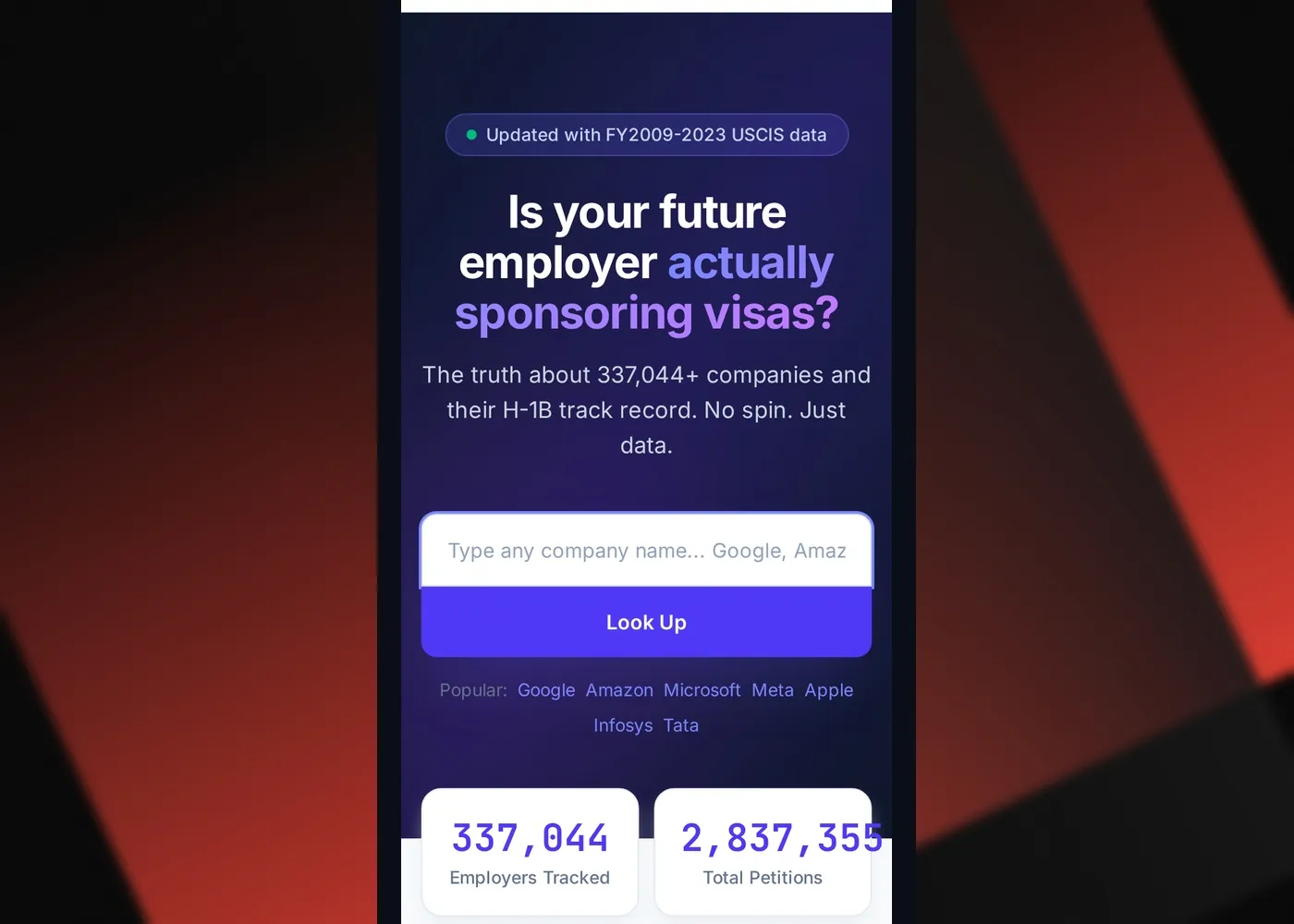
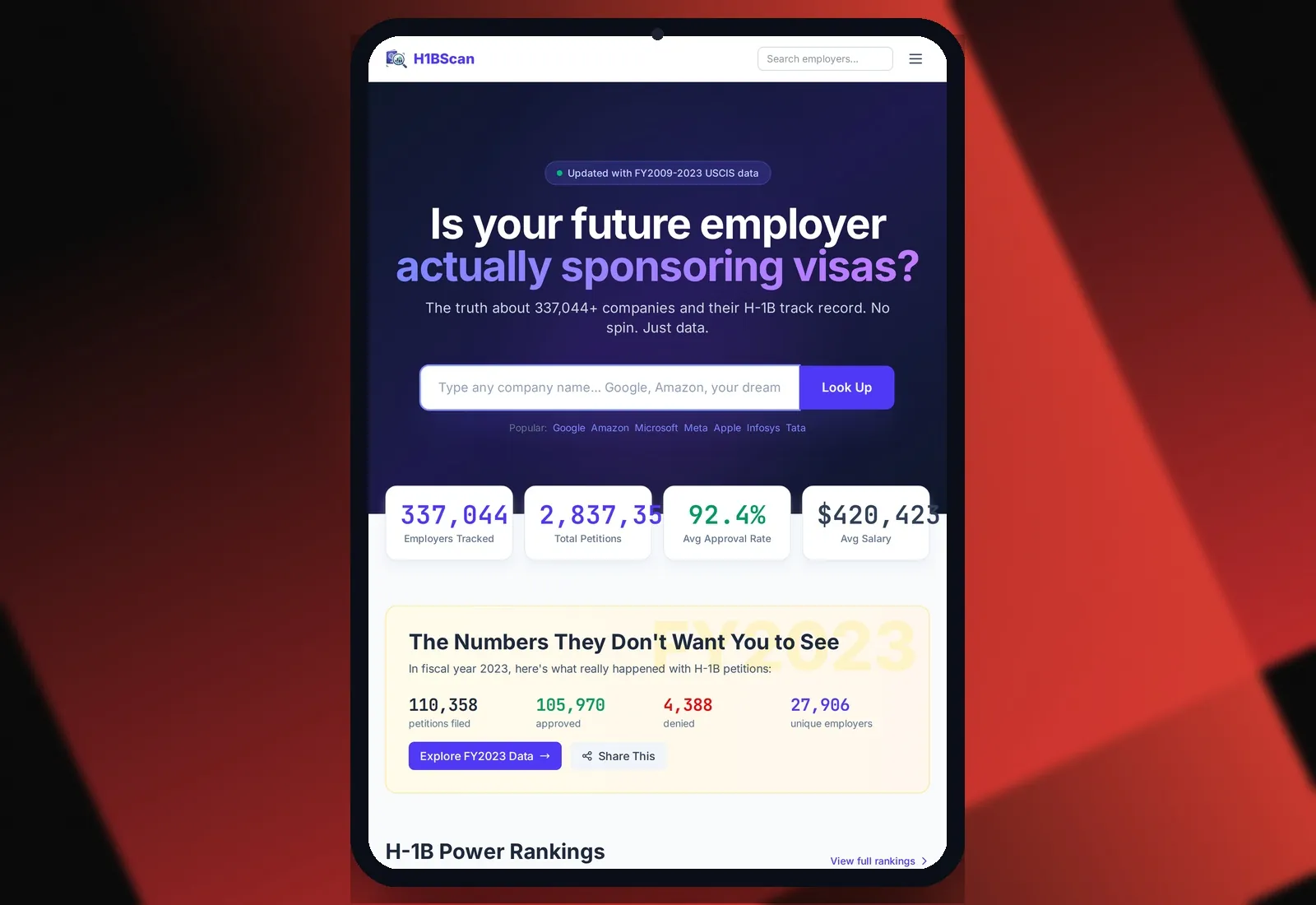
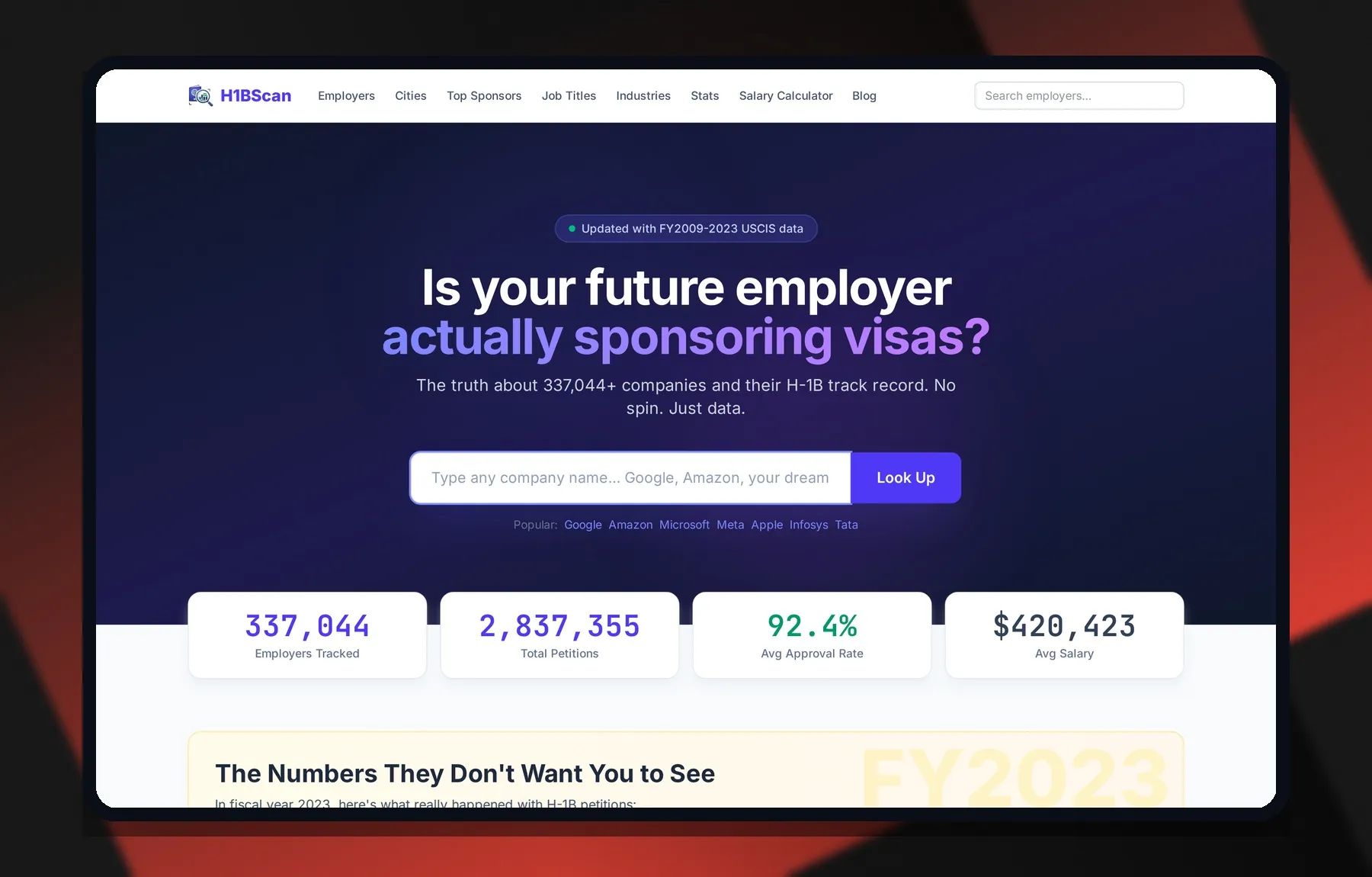
A few screenshots
Stack
You can try it with any well-known company: Visit h1bscan.com.
H1BScan FAQ
Which data sources power H1BScan?
Two official US sources: the USCIS H-1B Employer Data Hub (fiscal years 2009-2023) and Labor Condition Application (LCA) filings from the Department of Labor. Per the site itself, both feeds are refreshed quarterly in step with the official release schedule.
How many companies and petitions does the platform cover?
The homepage shows 337,044 employers tracked and 2,837,355 accumulated H-1B petitions, with an average approval rate of 92.4%.
What can a candidate verify before accepting an offer?
The company's entire H-1B track record: how many petitions it filed, how many were approved or denied, what salaries it declared in LCAs, for which job titles and cities, and how it stacks up against other sponsors in the rankings.
What is an LCA and why does it matter?
The Labor Condition Application is the document an employer files with the Department of Labor before petitioning for an H-1B. It lists the job title, offered salary and work location, which makes it the source that brings real salary transparency to the process.
What are the H-1B wage levels I-IV?
They represent the percentile of the prevailing wage for the role: Level I (17th percentile) is entry level, Level II (34th) qualified, Level III (50th) experienced and Level IV (67th) fully competent. H1BScan's salary calculator draws on these levels and on LCA data.
More of my own products
Need something on this scale?
Data platforms, programmatic SEO and architectures that handle millions of records. A free 30-minute call, no strings attached.
Request a free quote