WaterQualityDex
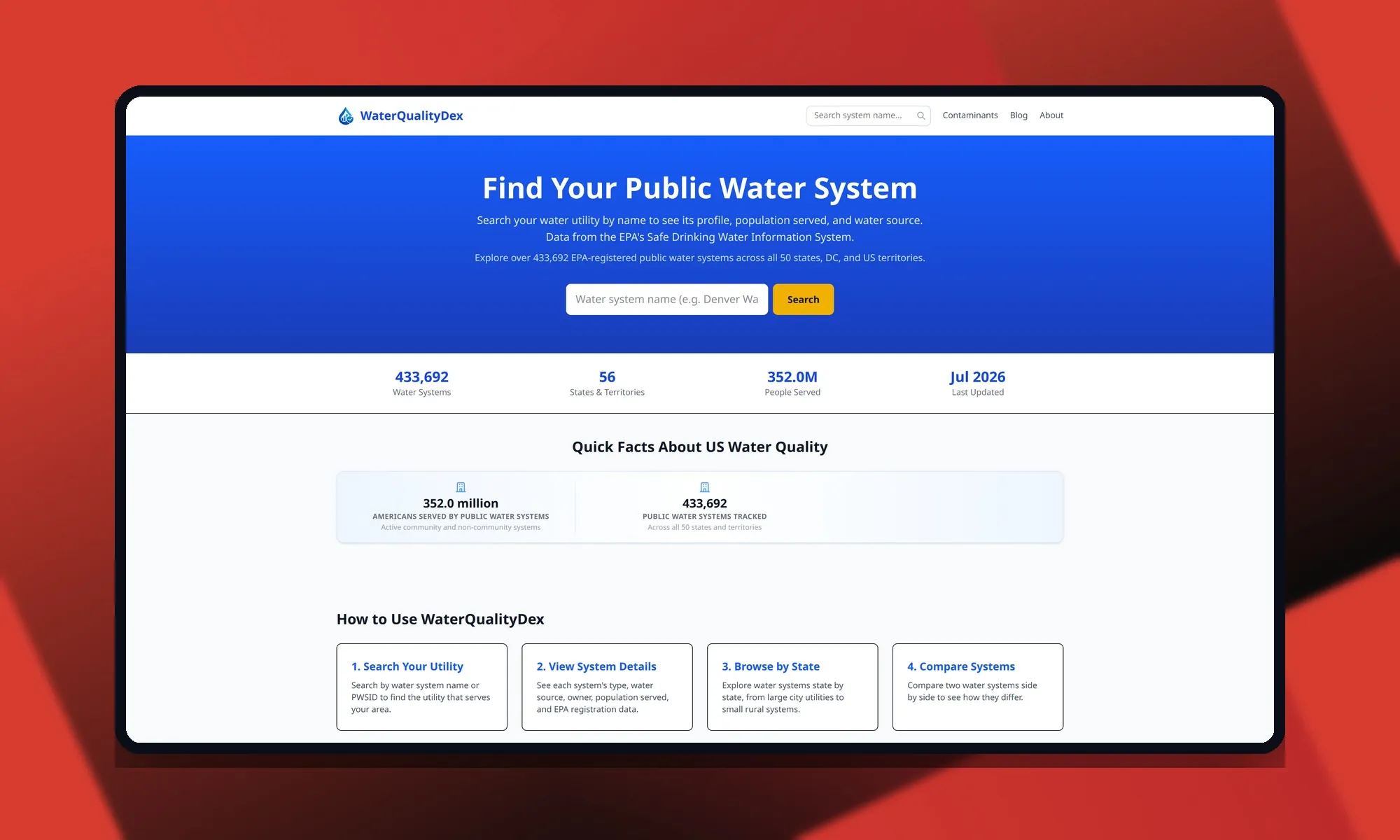
433,692 EPA-registered public water systems serving 352 million people, turned into a directory with search, profiles, a compare tool and a state ranking. Designed, built and operated by me as a product of my own network of sites.
Why it exists: the water you drink, explained
Nearly every American gets their water from an EPA-registered public system, yet very few can name theirs, say where the water comes from or how many people it serves. The data exists — the EPA publishes it in its Safe Drinking Water Information System (SDWIS) — but consulting the official source is a hostile experience: federal interfaces built for technicians, not for the neighbour who wants to know who fills their tap.
WaterQualityDex is an own product that answers exactly that: it takes the official SDWIS registry and republishes it as a directory where anyone can find their utility in seconds. It serves the curious resident, the mover who wants to know the system in their new town, local journalists covering water stories, and industry professionals who need to check records without wrestling with the EPA's website.
There is no client behind it: I designed it, built it and run it myself. It is one of the pieces of my own network of sites on public environmental health data, and one of the best examples of what I can do with a dataset of hundreds of thousands of records.
What you can do with it
- Utility search. Find any system by name or by its PWSID, the EPA's official identifier.
- A full profile per system. System type, water source, owner, population served and federal registration data.
- Browse by state. All 50 states, the District of Columbia and the territories, with listings that run from the big urban utility to the rural well.
- Side-by-side compare. Put two water systems head to head and see how they differ.
- State quality ranking. States ranked by the average violation score (a 0-100 mark) of their active systems.
- Contaminants section and blog. Plain-language content on drinking water contaminants and how to read the data.
How it is built
1. Laravel architecture
- Laravel + PHP backend on MySQL, with indexes tuned for the two lookups that matter: by system name and by PWSID.
- Blade templates that generate every profile, state listing, comparison and ranking straight from the data — one template, hundreds of thousands of pages.
- 100% custom build: no CMS, no purchased themes, no plugins. Every URL maps to a route and a query designed for that exact case.
2. Data pipeline
- Imports from SDWIS, the EPA's federal registry, normalising system types, water sources and ownership before anything touches the database.
- Periodic refreshes: the homepage always shows the date of the latest update, so visitors know exactly what they are looking at.
- A 0-100 violation score computed per system from the number of infractions, their severity, how recent they are and whether the system returned to compliance — the metric that powers the state ranking.
3. Programmatic SEO
- Hundreds of thousands of indexable URLs organised into state silos, so search engines grasp the hierarchy: country → state → system.
- XML sitemaps and structured data (Organization, WebSite with SearchAction, FAQPage) across the whole site.
- A genuinely useful page per system: scale never gets in the way of each page answering a real search ("who supplies the water in my town?").
4. Performance
- Server-rendered HTML: every page reaches the browser complete, with no frontend framework to wait for.
- Assets compiled with Vite, with critical CSS and JS preloaded.
- Cloudflare in front for caching, protection and global delivery — the site's audience is on the other side of the Atlantic.
Coverage and where the data comes from
Coverage spans all 50 states, the District of Columbia and the US territories: 56 jurisdictions in total, from California to Guam. Every data point comes from the EPA's Safe Drinking Water Information System (SDWIS), the same federal database that tracks regulatory compliance for every public water system in the country. WaterQualityDex invents nothing: it organises the data, cross-references it and makes it readable — and states on the homepage when it was last refreshed.
The result
A production directory indexing 433,692 public water systems serving 352 million people, browsable by state, with search, compare tool and ranking — all handled by a server that never breaks a sweat, because the architecture was designed for that scale from day one.
For me it is also an honest proving ground: there is no client to show a demo to, just real users arriving from Google. Everything I learn running it — data pipelines, large-scale programmatic SEO, performance across hundreds of thousands of pages — is exactly what I apply when I build data platforms for clients.
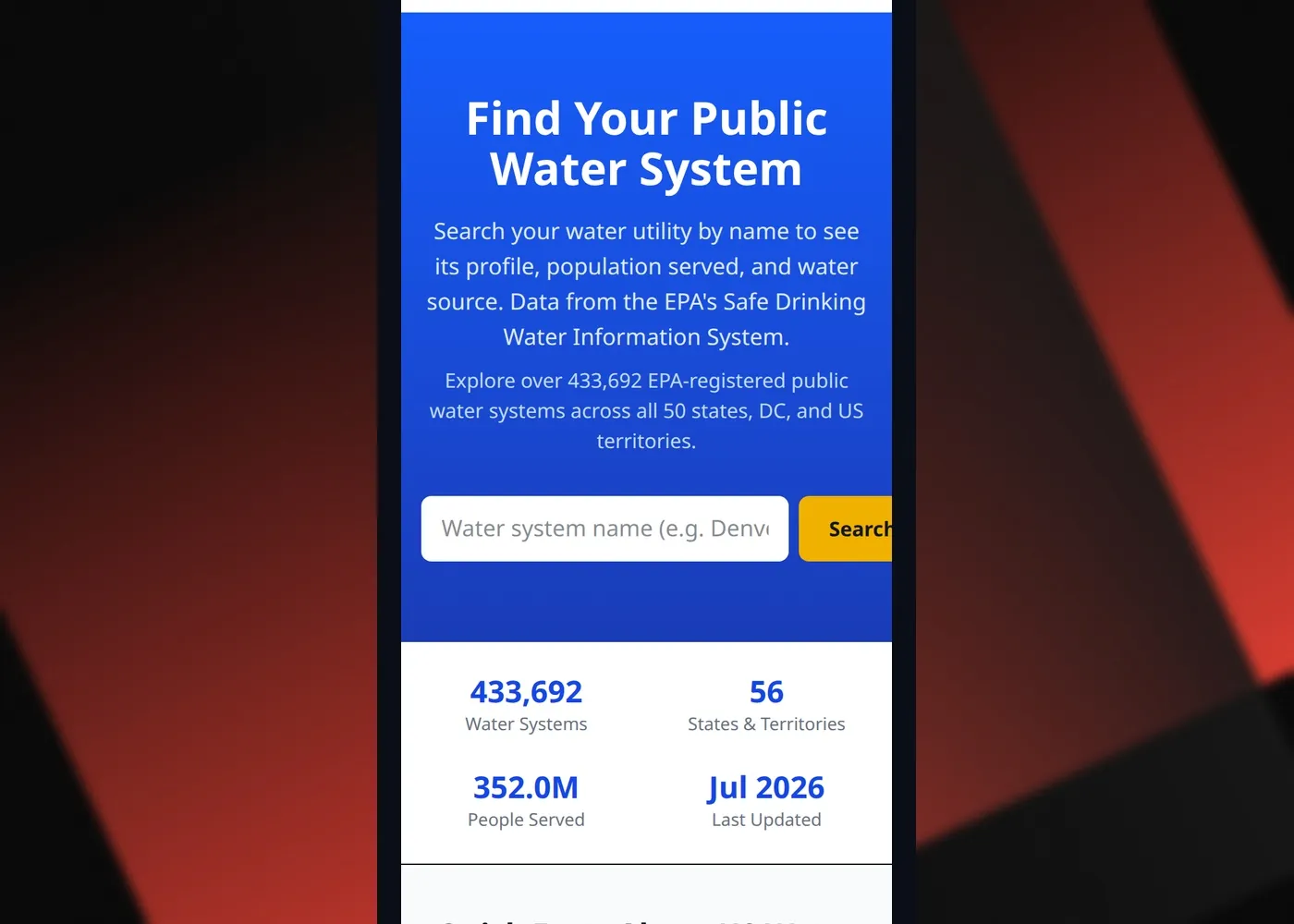
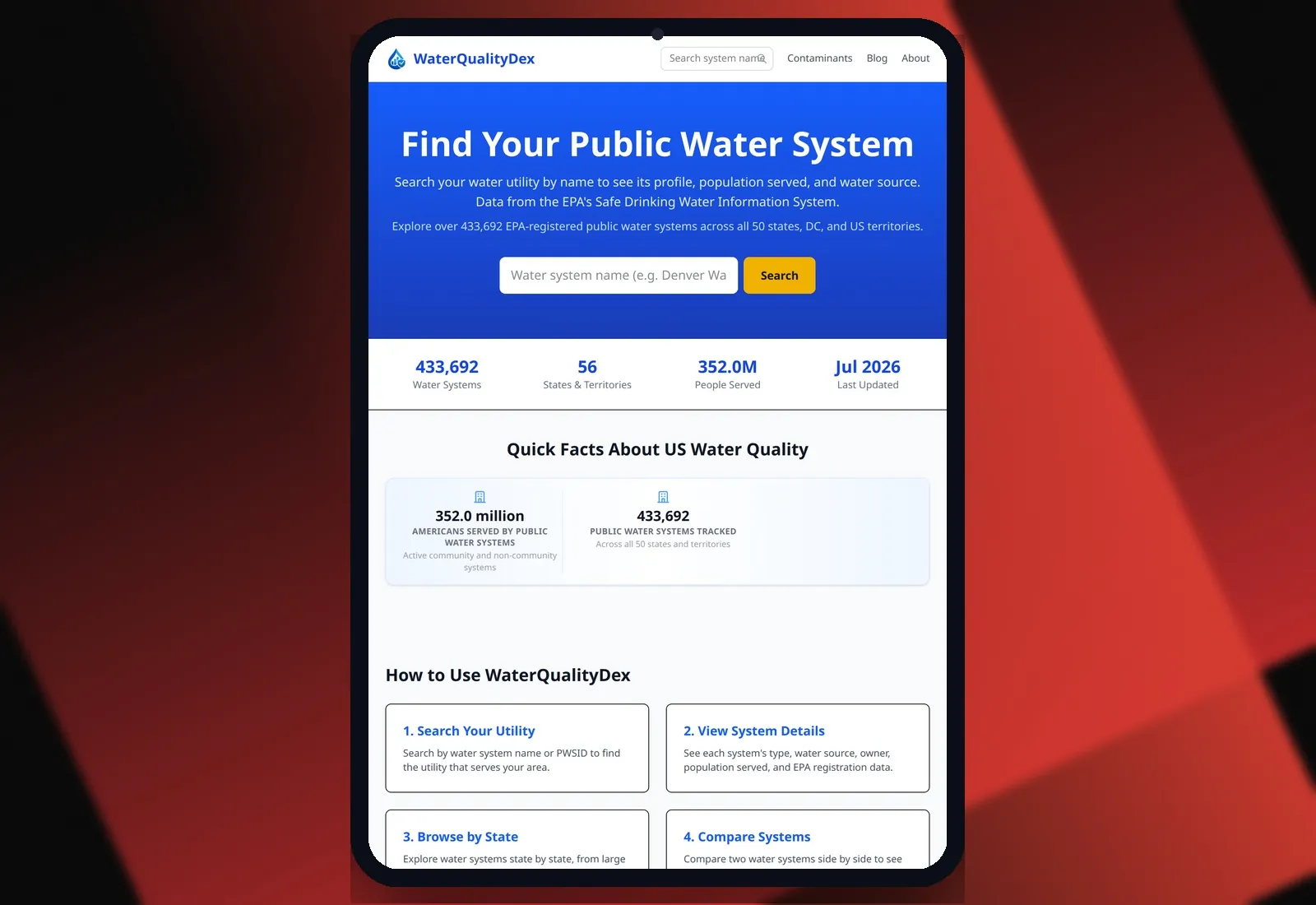
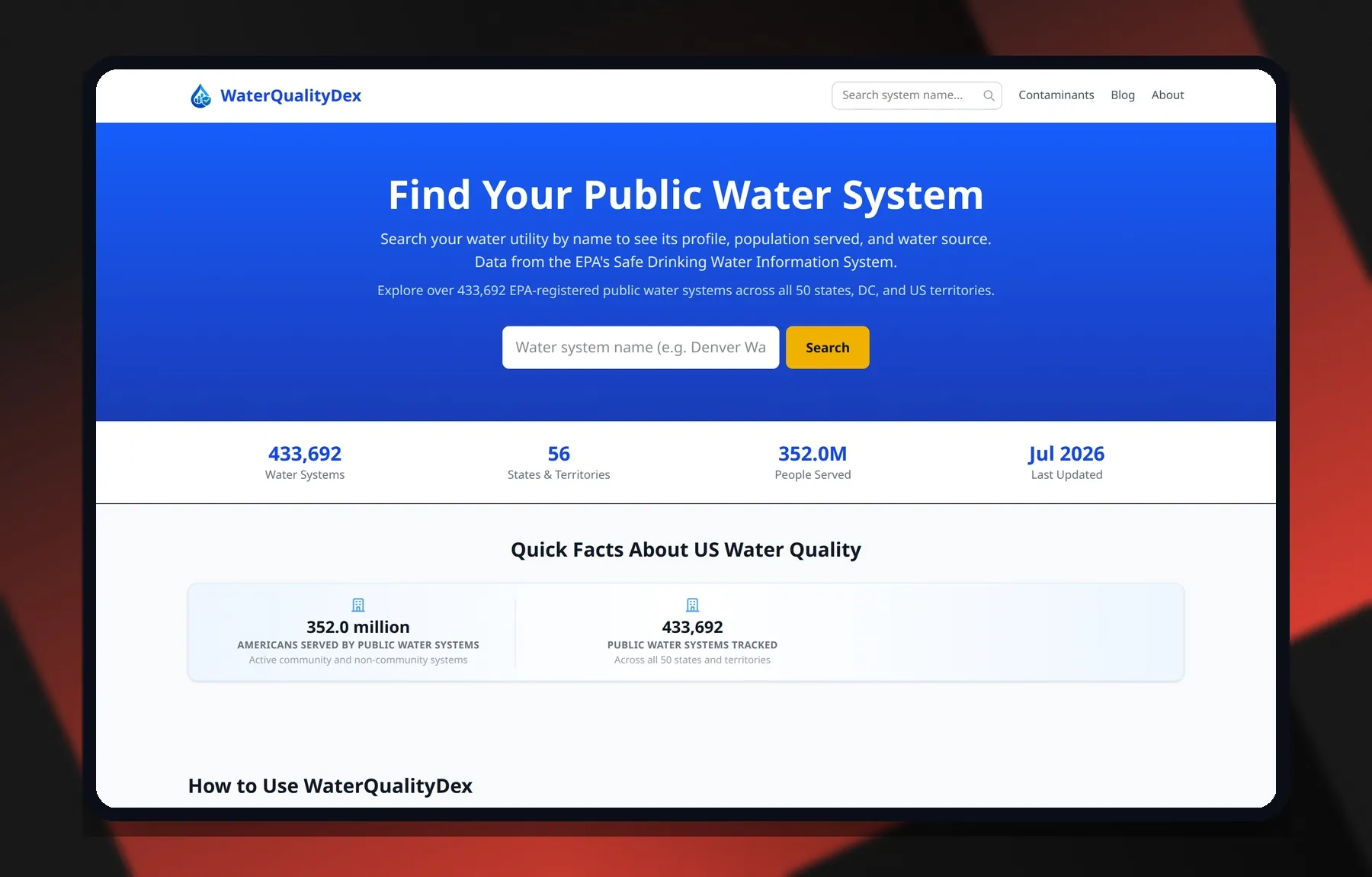
A few screenshots
Stack
Live: Visit waterqualitydex.com — an own product from my network of sites.
Frequently asked questions about the directory
Where does the WaterQualityDex data come from?
From the Safe Drinking Water Information System (SDWIS) run by the EPA, the United States environmental agency. It is the country's official registry of public drinking water systems, and the homepage always shows the date of the latest data refresh.
How do I find the water system that supplies me?
Search by your water company's name or by its PWSID (the official identifier of every public system). You can also browse state by state, from big urban utilities down to small rural systems.
What information does each system profile show?
The system type, the water source, the owner, the population served and its EPA registration data. There are also state pages with violation data and contaminant information.
Can I compare two water systems?
Yes. The platform includes a side-by-side comparison of any two systems, plus a ranking of states by the average violation score of all their active systems.
What is the violation score behind the ranking?
A 0-100 mark that summarises each system's compliance history: 0 means no violations on record, while high marks point to numerous or serious infractions. It weighs the number of violations, their severity, how recent they are and whether the system returned to compliance.
Is WaterQualityDex free?
Yes. It is a free, openly accessible directory: searching for a system, viewing its profile, browsing by state and using the compare tool costs nothing and requires no sign-up.
More own products
More public-data directories on environmental health and safety in the US and Europe.
Need a data platform like this?
Laravel, MySQL, programmatic SEO and hundreds of thousands of pages served reliably. A free 30-minute call, no strings attached.
Request a free quote