Website Redesign Without Losing SEO: A Practical Guide
· 11 min read · by Adrian Rojas Barrera
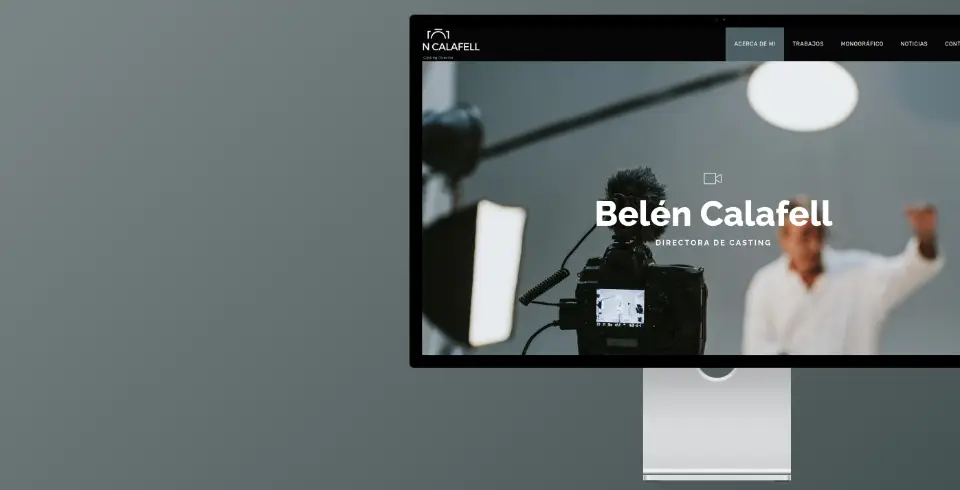
The most expensive phrase in web development is "we launched the new site and traffic disappeared". I have been called in after enough of these to know the pattern: the redesign was treated as a design project, and the old site's search equity — years of accumulated rankings — was nobody's job to protect. This is the process that prevents it, step by step, with the exact checklists I use on migrations.
1. Why redesigns kill traffic
Search rankings are attached to URLs, titles and content — not to your brand's general goodness. A redesign typically changes all three at once. When an old URL disappears without a redirect, the authority it accumulated (links, history, engagement signals) dies with it. When a title tag that ranked for years is rewritten to something prettier, the ranking follows the old title out of the door. None of this is mysterious; it is mechanical, which is good news: mechanical problems have mechanical solutions.
The root cause is organisational. Designers are briefed to make it beautiful, developers to make it work; nobody owns "make sure the thing that brought in the leads keeps happening". The fix is to treat search equity as a first-class deliverable of the redesign, starting before a single pixel is drawn.
2. Step 1: full URL inventory
Before touching the new build, produce a complete list of what exists today and what each URL is worth. Pull from four sources — each catches URLs the others miss:
- A full crawl of the live site (Screaming Frog or similar): every reachable URL, its title, H1 and status.
- Search Console, Performance report, last 12 months: every URL that received clicks or impressions — including pages you forgot existed.
- Analytics, landing pages, last 12 months: what actually receives visits from all channels, not just organic.
- Backlink data (Search Console links report, Ahrefs or similar): which URLs have external links pointing at them. These carry authority you cannot afford to orphan.
Merge into one spreadsheet, then triage each URL: keep (performs well), improve (has potential), merge (overlaps with a stronger page), kill (no traffic, no links, no purpose). This spreadsheet is now the single most important document of the redesign — every later step reads from it.
3. Step 2: the 301 redirect map
For every old URL that changes or disappears, decide where it goes. The rules that matter:
- One row per old URL, one exact destination. "Old blog posts → blog home" is not a map; it is a shrug in spreadsheet form.
- Redirect to the closest equivalent, never bulk to the homepage. Google treats irrelevant mass redirects as soft 404s and discards the signals — you did the work of redirecting and got nothing for it. Match page to page; fall back to the relevant category only when no true equivalent exists.
- 301, permanent, single hop. Chains (old → older-redirect → new) leak speed and occasionally signals; point every legacy URL directly at its final destination, including updating redirects that survive from previous migrations.
- Let genuinely dead pages die cleanly. A URL with no traffic, no links and no successor should return 404 or 410. Redirecting everything indiscriminately just muddies the map.
- Implement server-side — .htaccess, nginx config, or the platform's redirect layer. Not JavaScript redirects, not meta refresh.
- Test before launch on staging: crawl the full old-URL list against the new rules and verify every row answers 301 to the mapped destination.
4. Step 3: keep what's winning
The redirect map protects URLs; this step protects content. From your inventory, identify the pages that rank — then treat their working elements as load-bearing walls:
- Title tags and H1s that rank stay, word for word where possible. "Plumber in Sabadell — 24h emergency service" may offend the brand guidelines, but it is the phrase Google has spent three years learning to trust. Restyle around it, not through it.
- Ranking copy survives the redesign. Designers love cutting "all that text". That text is frequently why the page ranks. Reformat it, break it up, make it scannable — but do not delete substance a page ranks for.
- Heading structure stays meaningful. H2s that match how people search are doing silent work. A visual refresh that flattens them into styled divs throws that away.
- Internal links keep flowing. If the old site funnelled links toward key service pages, the new architecture must do the same or better. Navigation redesigns quietly orphan money pages all the time.
- Preserve structured data. Schema markup (organisation, services, FAQs, breadcrumbs) should be carried over and ideally improved, not dropped because the new theme doesn't output it.
5. Rule: one big change at a time
The highest-risk migrations I see combine a domain change with a full restructure — new name, new URLs, new content, same launch day. Each change alone is manageable. Together they multiply risk, and worse, they make diagnosis impossible: when traffic drops, you cannot tell which change caused it, so you cannot fix it.
If you must do both, sequence them: move the domain with structure frozen (a clean 1:1 redirect map, the easiest migration there is), let rankings stabilise for a couple of months, then restructure on the new domain. Boring, and boring is precisely the point — migrations reward boredom.
6. Pre-launch checklist
- URL inventory complete — crawl + Search Console + analytics + backlinks merged and triaged.
- Redirect map written and tested on staging — every old URL answers 301, single hop, correct destination.
- Winning titles, H1s and content carried over — diff the top 20 traffic pages old vs new, element by element.
- Staging blocked from indexing — and, critically, a written step to unblock at launch. Half of post-launch disasters are a noindex tag or robots.txt disallow that shipped to production.
- Canonicals point to the new URLs — not to staging hostnames, not to the old site.
- New XML sitemap generated and ready to submit.
- Analytics and Search Console verified on the new site before launch day, so you have continuity of data.
- Performance equal or better — the new site should beat the old one on Core Web Vitals; a slower redesign starts life with a handicap.
- Benchmark recorded — export current rankings and traffic per page. Without a baseline, post-launch arguments are opinion contests.
7. Post-launch checklist
- Launch day: crawl the full old-URL list against production — every row 301s in one hop. Spot-check redirects from external backlinks specifically.
- Launch day: confirm indexing is open — no stray noindex, robots.txt correct, canonicals right. Submit the new sitemap; keep the old one submitted briefly so crawlers discover redirects faster.
- Daily, first two weeks: Search Console Pages report for 404 spikes and coverage anomalies; fix new 404s by extending the redirect map.
- Weekly, first two months: compare per-page clicks against your benchmark. Expect fluctuation for 2–6 weeks; investigate any page down more than ~30% beyond that window.
- Keep redirects live for years, not months. Old URLs live on in bookmarks, printed materials and links you don't control. Redirects are infrastructure, not a launch-week accessory.
8. Traffic-killing mistakes (field-collected)
- The noindex that went to production. The classic. Site launches, traffic flatlines, three weeks pass before anyone views source.
- Redirect map written after launch. By the time 404s show up in reports, rankings are already bleeding. The map is a pre-launch artefact.
- Everything redirected to the homepage. Soft-404 city; all that accumulated equity, discarded.
- "While we're at it" content purges. Deleting old posts and thin-looking pages during the redesign without checking the inventory — several of them were quietly ranking.
- Titles rewritten by branding. Every page renamed to "Inspire. Create. Deliver." variants; every ranking gone with the keywords.
- JS-only rendering of critical content. The new framework renders beautifully in the browser and sparsely for crawlers. Verify with the URL inspection tool, not with your eyes.
- Domain + structure + platform in one leap. See section 5 — when it drops, nobody can say why.
Most of these are cheap to prevent and expensive to repair — the difference is whether anyone owns the process. This is a standard part of how I run WordPress projects: redesigns ship with the inventory, the map and both checklists as deliverables, whatever the sector (see the industries I work with).
9. Frequently asked questions
Why do website redesigns lose SEO traffic?
Almost always for mechanical reasons, not mysterious ones: URLs changed without 301 redirects, winning title tags and H1s rewritten for style, content that ranked getting deleted or merged, or the new build blocking crawlers (noindex left on, broken canonicals, JS-only rendering). Each is preventable with an inventory before the build and a checklist at launch.
What is a 301 redirect map and do I really need one?
A spreadsheet with one row per old URL and the exact new URL it should permanently redirect to. If any URL changes in the redesign, yes, you need one — 301 redirects are how search engines transfer the ranking signals a page has earned to its new address. Every changed URL without a redirect returns 404 and loses its accumulated authority.
Should redirects point to the homepage if there is no equivalent page?
No. Bulk-redirecting old pages to the homepage is treated by Google as a soft 404 — the signals are discarded, exactly as if you had let the page die. Redirect each URL to its closest genuine equivalent: the matching new page, or the most relevant category. Only URLs with truly no successor should return a clean 404 or 410.
Can I change my domain and site structure at the same time?
You can, but you should not. Each change alone is manageable; together they multiply risk and — worse — make diagnosis impossible, because you cannot tell whether a traffic drop comes from the domain move or the restructure. Move the domain with the structure frozen, let rankings stabilise for a couple of months, then restructure. One variable at a time.
How long does it take rankings to recover after a redesign?
With correct one-hop 301s and preserved content, expect some fluctuation for 2–6 weeks as search engines recrawl and reconcile the new structure. A well-executed redesign often ends up ranking better, because redesigns usually fix speed and mobile experience. Drops that persist beyond that window are a symptom — recheck redirects, indexability and what content was cut.
What should I monitor immediately after relaunch?
Search Console daily for the first weeks: the Coverage/Pages report for spikes in 404s and "Crawled – currently not indexed", plus performance by page comparing clicks pre/post launch. Crawl the old URL inventory to verify every redirect answers 301 in a single hop. Keep the old sitemap submitted briefly so crawlers discover the redirects faster, alongside the new one.